


Série de conférences mensuelles, le Colloquium Jacques Morgenstern expose les recherches les plus actives et les plus prometteuses dans le domaine des Sciences et Technologies de l’Information et de la Communication (STIC).
Les orateurs, français ou étrangers, sont des personnalités de premier plan, informaticiens, mathématiciens ou spécialistes de domaines où l'informatique est appelée à jouer un rôle majeur.
Les exposés couvrent une problématique suffisamment large pour intéresser tous les chercheurs, ingénieurs et étudiants concernés par l’avenir des STIC.
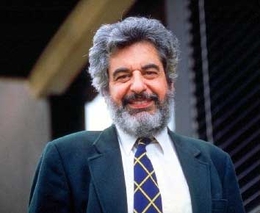 Le colloquium porte le nom de Jacques Morgenstern, professeur de mathématiques à l'Université de Nice Sophia Antipolis, spécialiste de la théorie de la complexité algébrique et l’un des pionniers du calcul formel. Il a dirigé jusqu’à son décès tragique en 1994 une équipe commune à l’Université de Nice Sophia Antipolis, Inria et le CNRS.
Le colloquium est un élément de la formation de l’Ecole Doctorale STIC. Entrée libre.
Les orateurs, français ou étrangers, sont des personnalités de premier plan, informaticiens, mathématiciens ou spécialistes de domaines où l'informatique est appelée à jouer un rôle majeur.
Les exposés couvrent une problématique suffisamment large pour intéresser tous les chercheurs, ingénieurs et étudiants concernés par l’avenir des STIC.
Le colloquium porte le nom de Jacques Morgenstern, professeur de mathématiques à l'Université de Nice Sophia Antipolis, spécialiste de la théorie de la complexité algébrique et l’un des pionniers du calcul formel. Il a dirigé jusqu’à son décès tragique en 1994 une équipe commune à l’Université de Nice Sophia Antipolis, Inria et le CNRS.
Le colloquium est un élément de la formation de l’Ecole Doctorale STIC. Entrée libre.
Nos derniers orateurs

Formally Verified (Post-Quantum) Cryptography, by Gilles Barthe (MPI-SP)
January 8th, 2026 The NIST Post-Quantum Standardization program (2016-ongoing) aims to standardize a new generation of cryptographic algorithms resistant against quantum attackers.The talk will report and reflect on our long-term efforts to develop formally verified implementations of ML-KEM and ML-DSA, that were selected for standardization by NIST in 2022 and finally standardized in 2024. Bio:…

Quantum feedback engineering, bosonic codes and quantum error correction, by Pierre Rouchon (Mines Paris – PSL)
October 16th, 2025 Quantum error correction relies on a feedback loop. This feedback generally corresponds to a classical controller. Quantum error correction can also exploit the dissipation associated with the phenomenon of decoherence. Called autonomous correction by physicists, it then uses feedback where the controller is a dissipative quantum auxiliary system. This talk focuses on…

Storing Digital Data on Synthetic DNA: State of the Art and Open Challenges, by Marc Antonini (CNRS)
June 19th, 2025 The amount of digital data generated worldwide is continuously growing at an unprecedented rate: 90% of all existing data has been created in the last two years alone. This explosive growth leads to an exponential increase in the consumption of scarce resources and energy, with no absolute guarantee of the long-term integrity…
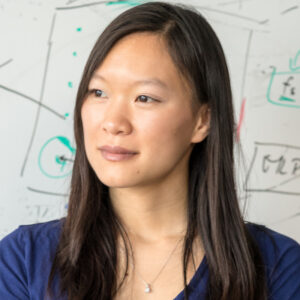
Angela Dai – 3D in a Large-Data World
March 18th, 2025 Recent advances in machine learning have shown remarkable progress in the 2D and video domain, fueled by very large-scale data and compute. 3D, however, which is critical for applications spanning content creation, mixed reality, and robotics, remains constrained by significantly more limited data representing higher-dimensional information. In this talk, we first address…
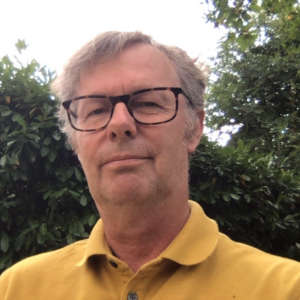
Philippe Jacquet – The performance paradoxes of wireless networks due to physical constraints
December 12th, 2024 Wireless networks are the most interesting embodiment of telecommunication technologies. Wireless networks are those most influenced by the physics of space and time. The medium of information transport is the electromagnetic field, which interacts strongly with the environment and can undergo rapid variations, given the mobility of users and the variability of…
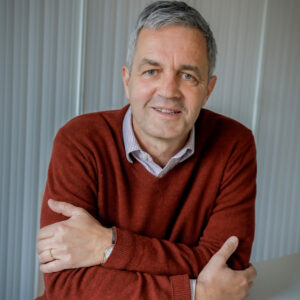
Rodolphe Sepulchre – Spiking Control Systems
October 3rd, 2024 Spikes and rhythms organize control and communication in the animal world, in contrast to the bits and clocks of digital technology. As continuous-time signals that can be counted, spikes have a mixed nature. This talk will review ongoing efforts to develop a control theory of spiking systems. The central thesis is that…